
Standing With the People: Daung on Art, Propaganda, and the Politics of Choice
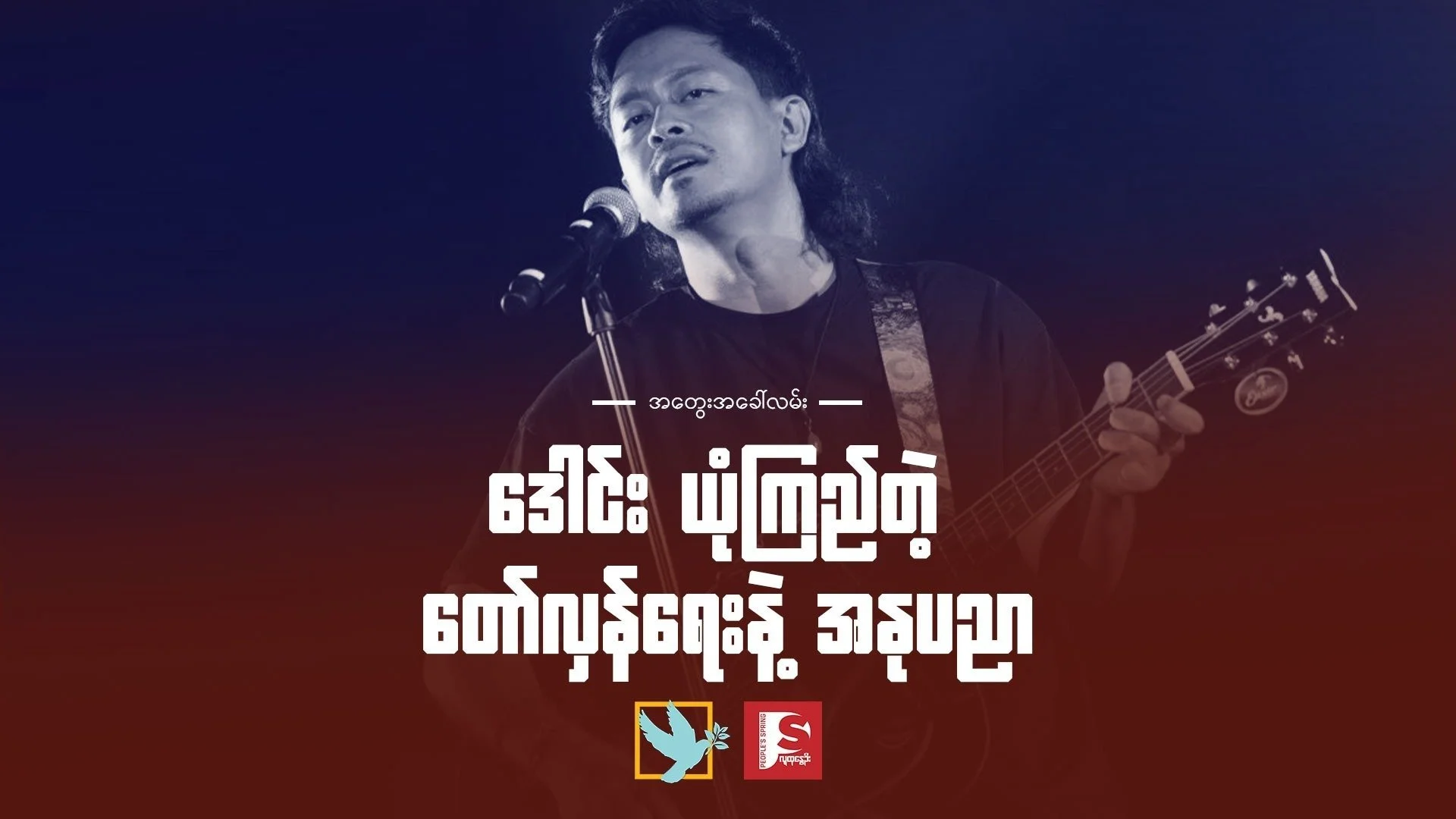
This blog is adapted from an interview segment featuring revolutionary actor Daung, extracted from a talk show jointly hosted by People’s Goal and People’s Spring under the Thought Process Program. While the full discussion included three panelists, this piece focuses solely on Daung’s reflections, voice, and arguments from the broader dialogue.
“An artist who stands with the people is an artist. One who turns their back on the people is a self seeker.”
When Propaganda Backfires
Daung opens with a counterintuitive stance. Instead of reacting with anger to a recent military backed propaganda short film, he calls it “good”. Good not because of its message, but because it strips away pretense. For him, such films unintentionally help people see clearly who stands where.
He explains that authoritarian propaganda thrives on confusion. By blurring moral lines, the junta tries to make people question their resistance and even doubt themselves. Yet, Daung believes the public is not naive. Over time, repeated propaganda exposes its own intent and reveals the fear behind it.
Who Is an Artist, Really?
For Daung, the question of artists and dictators is not abstract. Myanmar’s political history has always forced artists to choose. From 1988 to 2007 and again after 2021, some artists stood with the people despite threats. Others chose safety, success, or status.
He draws a clear line. An artist is not defined by fame or talent alone, but by where they stand. Once artists begin to see themselves as superior to ordinary people, he argues, they drift away from responsibility. Success becomes something to protect at all costs, even if it means collaborating with a system that destroys lives.
Daung is careful to say that everyone makes their own choice. But choices carry meaning. History remembers where people stood, not how popular they were.
Art as a Tool, Not an Excuse
Daung rejects the idea that he resists the dictatorship as an artist. He resists as a citizen. Art, in his view, is simply a tool, a medium he happens to use because it connects him to the public.
He emphasizes that his participation in the Civil Disobedience Movement is not against the people, but against the dictators. Whether someone is a true artist or not, he says, will ultimately be decided by the people themselves.
Reading the Threats Behind the Screen
In analyzing the propaganda film, Daung urges audiences to look beyond surface level outrage. The repeated phrases in the film, warnings not to comment, not to act, not to speak, are not accidental. They are threats.
He points out how the film portrays the public as foolish and passive, while painting revolutionaries as violent. These narratives are meant to instill fear ahead of elections. For Daung, boycotting propaganda artists is necessary, but awareness is even more important. People must understand what messages are being planted and why.
The Weight of Growing Up Under Dictatorship
Daung shares a personal reflection on his political awakening. Raised in a heavily indoctrinated environment, he only began to question the system during the 2007 uprising. Books were censored. History was hidden. Like many of his generation, he grew up without access to the truth.
This, he says, is why the revolution is not about restoring a lost golden age. It is about ensuring future generations do not grow up under the same lies. Even if today’s generation never fully enjoys freedom, the struggle still matters.
How Should People Respond?
Daung’s answer is simple but difficult. Ignore and refuse to support artists who side with injustice. He believes indifference is what collaborators fear most. When public approval disappears, so does the false glamour of status.
He criticizes what he calls the “VIP mindset” in the mainstream art world, where celebrities flaunt wealth while people lose homes and lives. Such behavior, he says, should be seen as shameful. When society collectively refuses to normalize it, accountability follows naturally.
Freedom as Everyday Safety
In one of the most personal moments, Daung reflects on freedom not as grand slogans, but as everyday certainty. Knowing your family will come home safely. Walking the streets without fear. Creating a future without constant anxiety.
These small freedoms, briefly felt after 2015 and lost after 2021, are what drive continued resistance. For him, resilience comes from remembering that difference and refusing to accept injustice as normal.
Holding the Line
Daung closes with quiet determination. The junta fears one thing above all else, a people who refuse to accept injustice. That refusal, shown through boycott, awareness, and solidarity, has already led to international rejection of the regime’s actions.
If people hold onto dignity, empathy, and resilience, he believes, the goal is not far away.