

By Phone Ye Naung
In December 2025, there was a noticeable surge in the collection of data on university graduates through local ward administration offices in military-controlled areas. True to the military junta’s history of dishonesty and lack of transparency, the actual purpose behind these lists has not been disclosed. While there is widespread speculation regarding the State Administration Council’s (SAC) motives, it is certain that a military that harbors no goodwill toward the nation and its people cannot have any honorable intentions. The evidence is overwhelming. For a military that relentlessly carries out airstrikes on villages, schools, and hospitals across the country, there is clearly no limit to what it is willing to do to the people.
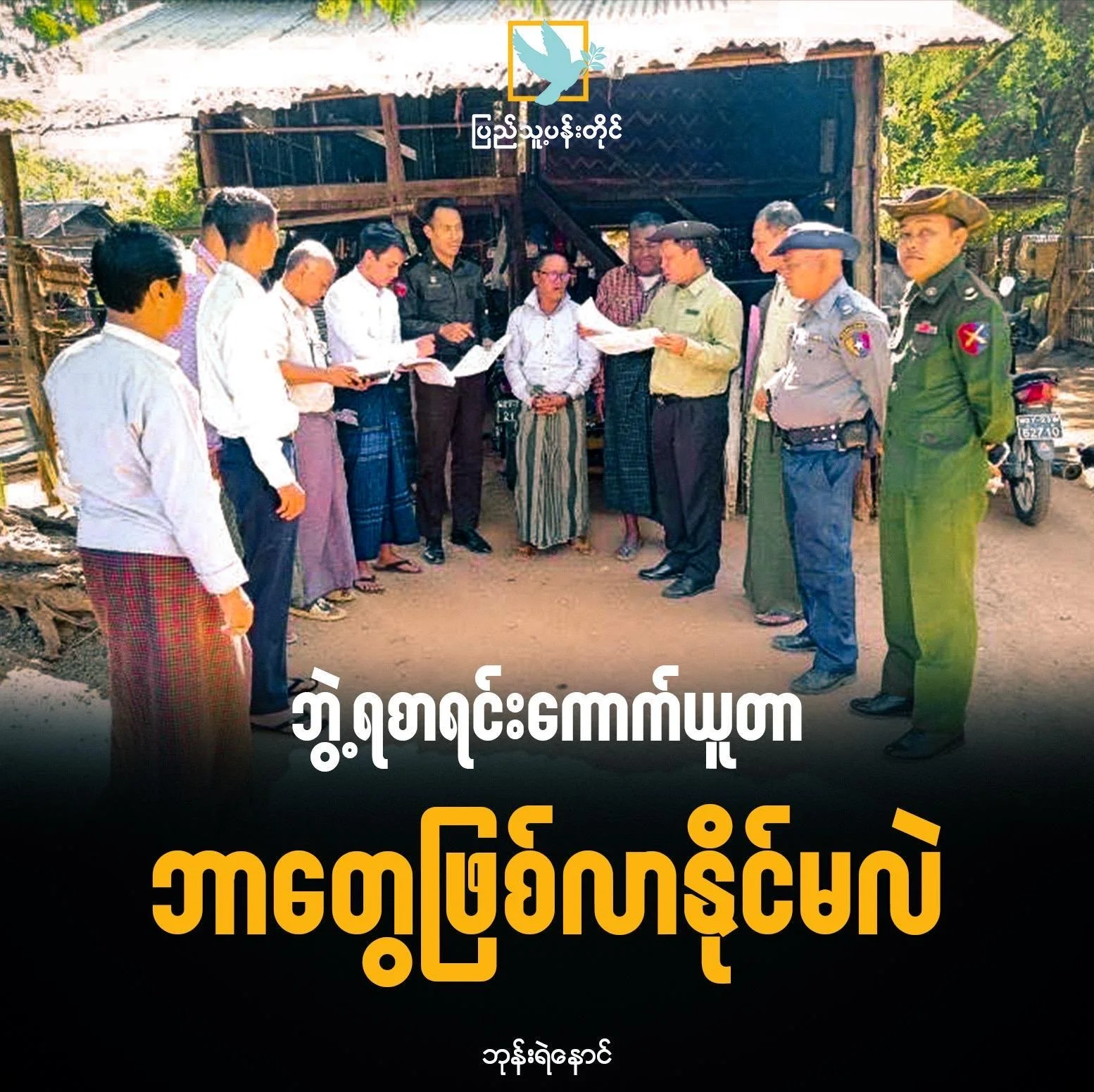
Some argue that educational data was already captured during the general census, while others question the need for this separate collection, suggesting that precise records could simply be obtained from universities. However, university records only track the annual number of graduates and cannot provide up-to-date information on where individuals currently reside at the ward or village level. Since the coup, many graduates have moved away from their original addresses, with some relocating internally, while others joined the Civil Disobedience Movement (CDM) and went into hiding or joined revolutionary forces. Furthermore, a vast number have left the country through both legal and informal channels. Consequently, the military junta is seeking to identify the actual number of graduates remaining on the ground, specifically those it can still target and exploit.
Media reports indicate that the data collection targets individuals who graduated between 2015 and 2025. While the duration of university education varies by degree, this demographic generally includes individuals from their early 20s to their mid-30s. Notably, these age groups fall directly under the People’s Military Service Law. For those classified as “skilled professionals,” the age limit for military conscription extends up to 45 years for men and 35 years for women.
Under Chapter 1, Section 2(d) of the law, “experts” or “professionals” are defined as those with specialized skills, such as doctors, engineers, and technicians. Unlike ordinary conscripts who serve for two years, those classified as professionals are required to serve for three years, meaning that the expertise and education gained through one’s own hard work and personal investment would be exploited to serve the military junta. While the three-year term applies under normal circumstances, Section 4 of Chapter 2 stipulates that this service can be extended to five years during a state of emergency. Moreover, under Section 21(a) of Chapter 5 regarding “Military Mobilization,” additional call-up orders can be issued to prolong service. If the junta uses these graduate lists to recruit educated individuals, it would force them into prolonged servitude for the coup regime.
Under Chapter 4, Section 20, it is stipulated that “holders of doctoral degrees, professional degrees, and those with qualifications as specified from time to time may be appointed as Emergency Commissioned Officers.” This suggests that the military may begin “conscripting” certain graduates directly into officer roles.
Some individuals may enter the military due to a lack of alternatives, the lure of incentives, or the scarcity of employment opportunities within the country. Ultimately, this represents a calculated move by the junta to bolster its ranks with skilled personnel, moving beyond mere frontline recruitment to strengthening its administrative and technical backbone.
Rather than investing years in training specialists at military academies, the junta may pivot toward exploiting “ready-to-use” civilian professionals and graduates. By bypassing the immense time, funding, and instructional resources required for military education, the regime can rapidly replenish its ranks by subjecting graduates to only brief periods of military training.
This indicates that the military, having already institutionalized the conscription of rank-and-file soldiers, is now shifting its focus toward filling vacancies in officer roles, technical units, and medical services. As of November 2025, the military has already opened its 19th batch of conscripts, and with a target of 5,000 recruits per batch, the total number of people drafted is nearing the 100,000 mark. Despite persistent desertions on the front lines, a mobilization of this magnitude represents a significant reinforcement of the junta’s capabilities. When this forced manpower is integrated with weaponry produced at the expense of public funds, it will pose a formidable obstacle to the revolution.
This situation serves as a critical test for the National Unity Government (NUG), following its reorganization on December 8, 2025, to demonstrate how it will effectively protect the people. Similarly, for sub-national entities such as the Sagaing Federal Unit Interim Government, established on December 23, 2025, it is vital to formulate regional strategies to counter and mitigate the impact of this conscription law.
We must remain vigilant, leveraging internal informants to expose the hidden agendas behind this data collection and monitoring how these lists are being utilized. Once credible evidence is secured, it must be reported to human rights organizations and the international community. It is essential for the public and the people’s government to coordinate with international partners, applying pressure collectively to prevent the military from misappropriating and depleting the nation’s most precious human capital.
[This article is curated and presented to strengthen the revolution and encourage diverse perspectives among the public. The ideas and views expressed here belong solely to the author and do not necessarily represent the stance of People’s Goal. We welcome comments and constructive discussions on the content of this article.]